Stellantis Reduces Production at Its Córdoba Plant for Seven Weeks
Stellantis will halt production at its Ferreyra plant from December 1, adding three weeks to the summer break in response to a 13% decline in vehicle sales. The adjustment is intended to reduce accumulated inventory in the company and its dealer network.
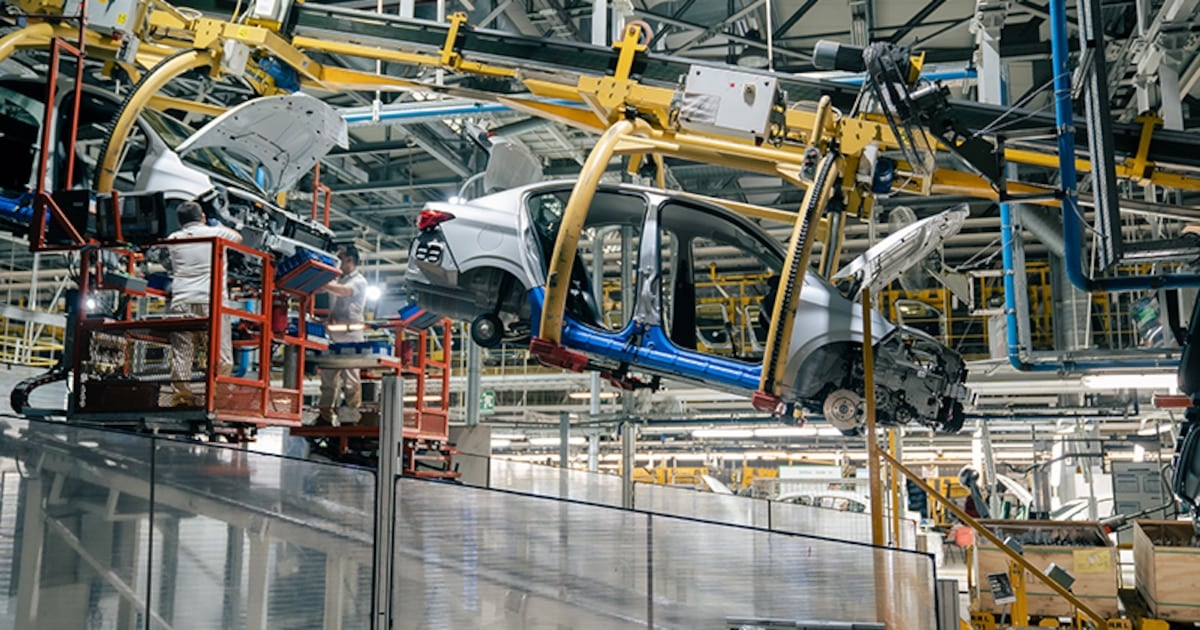
Dollars and the market will be the focus of attention this week. Stellantis Argentina decided to suspend production for seven weeks at its Ferreyra plant, located on the outskirts of Córdoba, starting on December 1. The measure adds three extra weeks to the company’s customary summer recess and is intended to align manufacturing volumes with a weaker-than-expected demand outlook for 2026.
At the complex, the company manufactures the Fiat Cronos sedan and the Fiat Titano and Ram Dakota pickups. The decision comes after vehicle sales in Argentina fell 13% during the first nine months of 2025 compared with the same period of the previous year. The contraction has been considerably sharper for several brands within the Stellantis group.
The decline is deeper across most brands
- Fiat sales fell 20.5%.
- Peugeot sales dropped 38.7%.
- Citroën sales declined 21.1%.
- Jeep sales fell 41.8%.
- DS sales registered a 65% decrease.
- Ram was the only brand to record growth, with sales up 2.2%.
The company’s other Argentine plant, in Palomar, Buenos Aires, had already suspended one of its two shifts in May for the same reasons. That facility produces the Peugeot 208 and 2008. According to Martín Zuppi, president of Stellantis Argentina, production at both factories is secured for 2026 and 2027. He characterized the Ferreyra stoppage as a readjustment designed to address inventory accumulated both within the company and at its dealer network.
“The two factories have production secured for 2026 and 2027.”Martín Zuppi, presidente de Stellantis Argentina
In real terms, the suspension does not imply an immediate shortage of vehicles for buyers. The availability of units at dealerships is precisely the factor that allows the company to reduce production. Stellantis does not foresee a pronounced recovery in 2027, a prospect that points to continued production adjustments during the following year.
The situation at Ferreyra also raises questions about the competitiveness of local production. Herlader Zola, president of Stellantis South America, stated in Brazil that production costs are very high at the Córdoba plant and that labor costs are twice as high as in Brazil. He also noted that the supply chain is short, with most components coming from Brazil.
The key figure to follow next week is whether the production stoppage translates into a further reduction in dealer inventory or begins to affect the availability of the Fiat Cronos, Fiat Titano and Ram Dakota. The persistence of the sales decline will also be decisive in determining the scale of the adjustments planned for 2026.